← Return to Master Partner Blueprint / Silo 1: Setup & Management
How to Apply for the Deriv Affiliate Program: Complete Step-by-Step Approval & Scaling Blueprint
The retail contracts-for-difference (CFD), options, and synthetic indices marketplace has matured into a multi-billion dollar global sector. In trading financial assets, individual participants carry balance sheet vulnerability and drawdown exposure. Conversely, institutional introducing brokers and master affiliates leverage an operational alternative: monetizing aggregate trading volume and partner networks with zero capital risk.
Deriv operates one of the most resilient partner infrastructures in financial brokerage history. Evolving from the original Binary.com framework established in 1999, the modern Deriv Partner Platform delivers lifetime multi-tier revenue shares of up to 45% alongside high-frequency volume rebates across synthetic indices.
Securing access to this institutional dashboard is not a simple form submission. Due to international anti-money laundering (AML) protocols, MiFID II standards, and regulatory oversight by authorities including the MFSA, LFSA, VFSC, and BFSC, Deriv’s compliance desk manually screens prospective affiliates. Incomplete promotional declarations, non-compliant promotional channels, or substandard documentation result in instant rejection.
This 3,000+ word master manual covers everything needed to navigate the Deriv affiliate application protocol: compliance auditing criteria, exact step-by-step registration inputs, legal verification requirements, compensation architecture selection, and scaling from your first approved account to a multi-tier passive revenue agency.
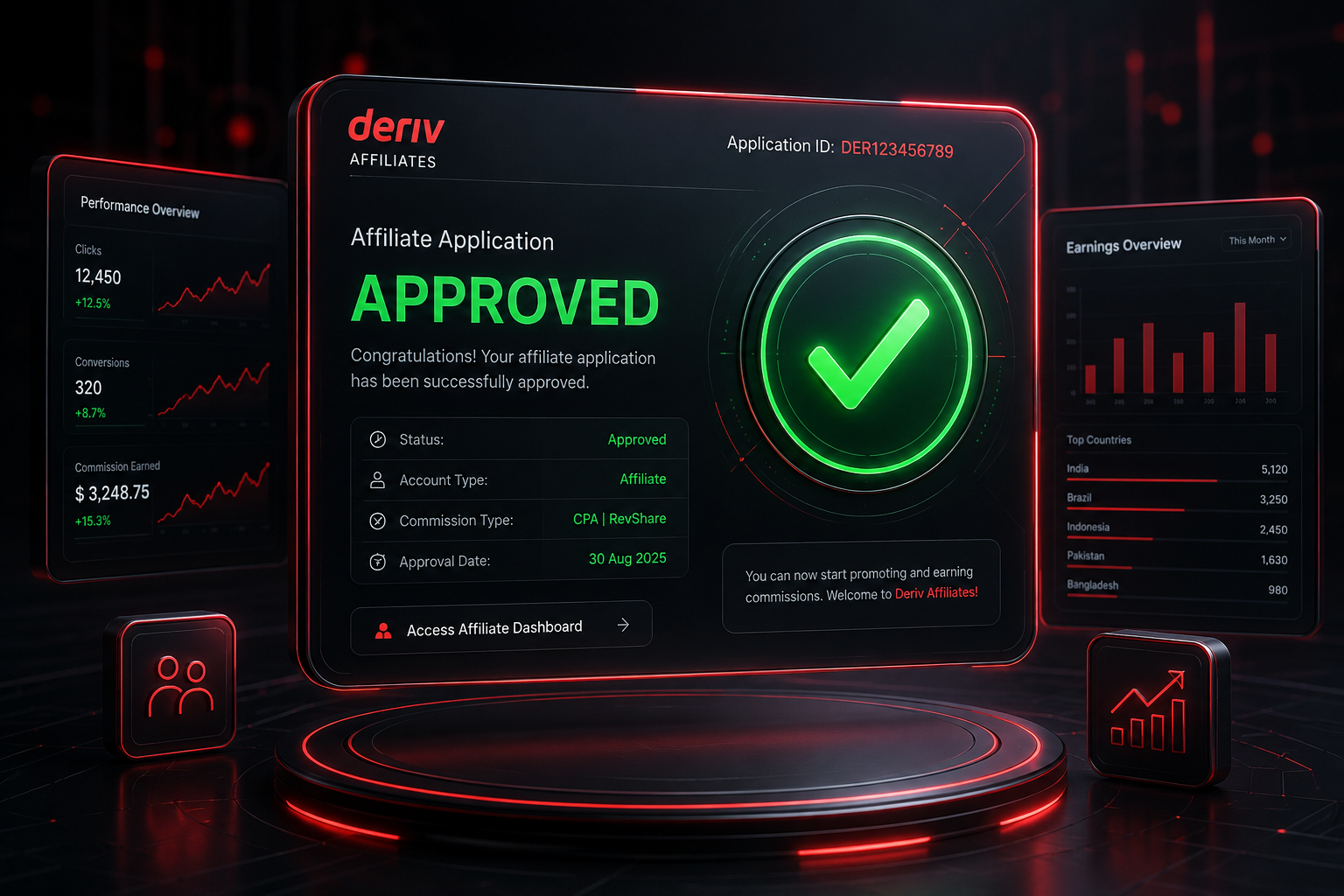
Figure 1: Architectural overview of the Deriv Partner Application & Approval Pipeline.
Blueprint Contents
- The Underlying Mechanics of Deriv’s Partner Infrastructure
- Core Prerequisites & Compliance Audit Benchmarks
- Account Classification: Individual vs. Corporate Registration
- Step-by-Step Application Walkthrough (Field-by-Field)
- Selecting Your Yield Engine: Revenue Share vs. Turnover (IB)
- KYC Protocols: Document Specifications & Identity Approval
- Why Applications Get Rejected: 6 Fatal Errors to Avoid
- Commission Mechanics & Sub-Affiliate Multipliers
- Immediate Post-Approval Scaling Playbook
- Frequently Asked Questions (FAQ)
1. The Underlying Mechanics of Deriv’s Partner Infrastructure
Before submitting your credentials to the compliance portal, you must master how Deriv structures its liquidity, client tracking, and partner remuneration. The Deriv affiliate ecosystem does not operate like generic retail e-commerce affiliate networks; it functions as a multi-tier financial agency framework built around two separate operational pillars.
Pillar A: The Introducing Broker (IB) Volume Architecture
The Introducing Broker framework is engineered primarily for trading educators, signal communities, algorithmic quantitative developers, and community leaders whose clients trade on MetaTrader 5 (MT5) or cTrader.
Under the IB model, your earnings are decoupled from trader outcomes. Whether your referred trader executes a profitable swing trade or liquidates their margin, you receive a predetermined commission per round-turn lot traded. On proprietary Synthetic Indices—such as Volatility 75, Boom 1000, and Crash 500—this model yields immense velocity because these instruments trade continuously with no market closes, allowing your volume commissions to accrue 24 hours a day, 7 days a week.
Pillar B: The Master Affiliate / Sub-Affiliate Override Network
The Master Partner system allows primary affiliates to build a scalable, decentralized sales force. As a Master Partner, you are issued dedicated tier-2 tracking parameters. When another trading educator, website operator, or content creator registers an affiliate account via your master link, they become linked to your organization indefinitely.
Every time your sub-affiliates generate revenue from their client books, Deriv’s automated clearinghouse calculates an institutional override commission (customarily ranging between 10% to 20% of the sub-affiliate's earnings) and deposits it directly into your treasury. This override does not reduce the sub-affiliate’s payout; it is underwritten directly from the broker's liquidity margin.
2. Core Prerequisites & Compliance Audit Benchmarks
Financial brokerage regulation requires strict compliance gatekeeping. While anyone can apply, applications that fail basic compliance screening are flagged and archived without manual review.
Ensure your digital assets satisfy these four benchmarks before proceeding:
- Operational Digital Footprint: Deriv requires verifiable proof of an active promotional medium. This can be a self-hosted content website, a YouTube channel focused on finance, a public Telegram channel delivering technical analysis, a TradingView analysis profile, or an active social media community.
- Transparent Value Proposition: Your promotional channel must focus on market analysis, trading mechanics, technical software walkthroughs, or risk control. Channels that promote financial shortcuts, guaranteed daily returns, or unlicensed investment pools are immediately disqualified.
- Jurisdictional Compliance: Deriv does not accept retail clients or affiliate applications from certain restricted territories due to regulatory frameworks. Prohibited regions include the United States, Canada, and specific territories sanctioned by international financial action task forces. Ensure your promotional efforts target accepted jurisdictions across Africa, Asia, Latin America, and compliant European segments.
- Uncompromising Identity Verification: You must possess authentic, unexpired, government-issued identification matching the legal name and country declared on your initial registration form.
3. Account Classification: Individual vs. Corporate Registration
During initial signup, Deriv requires you to define your legal operating structure. Choosing incorrectly causes delays, as switching between entities post-approval requires compliance team intervention.
| Evaluation Parameter | Individual Account | Corporate / Business Entity |
|---|---|---|
| Optimal User Profile | Independent traders, educators, niche bloggers, Telegram community leaders. | Registered media agencies, financial software enterprises, multi-partner organizations. |
| Documentation Required | Government Smartcard/Passport + Bank Statement or Utility Bill (past 90 days). | Certificate of Incorporation, Memorandum of Association, Shareholder Registry, Director IDs. |
| Approval Turnaround | 24 to 48 Hours. | 3 to 7 Business Days (involves institutional legal audit). |
| Payout Flexibility | Personal Crypto Wallets (USDT TRC-20, BTC), Skrill, Neteller, Local Payment Agents. | Corporate Bank Accounts, Institutional Business Wallets, Direct Wire Transfers. |
| Tax Identification Complexity | Simplified personal declaration based on residency. | Corporate Tax Identification Number (TIN) and corporate compliance audit required. |
4. Step-by-Step Application Walkthrough (Field-by-Field)
Follow this explicit protocol to execute your application accurately and ensure your submission bypasses automated filtering flags:
Step 1: Accessing the Institutional Portal
Do not register via the standard retail client signup page. Standard client registrations generate terminal trading accounts and will not provide affiliate tracking parameters.
Navigate directly to the official partner framework via our verified access gateway: Open Official Partner Application Terminal. Once the interface initializes, select "Sign Up as Partner".
Step 2: Credential Configuration & Security Setup
Input an active, dedicated professional email address. Avoid using temporary email domains, as these trigger automated fraud prevention firewalls. Establish a secure alphanumeric password (at least 12 characters, including upper case, lower case, numerals, and special characters). Confirm the verification token transmitted to your email inbox to validate ownership.
Step 3: Personal & Contact Information
Complete the personal identity fields with exact precision:
- Full Legal Name: Must match your passport or national identity document down to middle names and character placement.
- Date of Birth: Must confirm that you are at least 18 years of age (or the legal age of majority in your jurisdiction).
- Residential Address: Must match the proof of address document you will upload during the KYC phase. Avoid declaring post office boxes; input a verifiable residential street address.
- Phone Number & Messenger Details: Provide an active mobile number. Supplying your active Telegram handle or WhatsApp number allows your assigned regional partner manager to reach out quickly to expedite account approval.
Step 4: Formulating the Promotional Plan (The Deciding Factor)
The compliance desk reviews this input to assess whether your acquisition approach adheres to international financial advertising regulations. Leaving this field blank or writing generic statements like "I want to share links with friends" results in instant rejection.
Use this compliant framework when drafting your promotional operational summary:
Approved Operational Summary Template:
"I run an educational trading portal and digital community delivering technical analysis, risk management strategies, and charting tutorials focused on Synthetic Indices and FX. My audience comprises self-directed traders seeking comprehensive software walkthroughs, platform comparisons, and risk-managed trading setups. We introduce clients through long-form educational guides, platform tutorials, and live community webinars. All promotional materials carry clear risk disclaimers, never promise guaranteed investment returns, and adhere strictly to anti-spam compliance guidelines."
5. Selecting Your Yield Engine: Revenue Share vs. Turnover (IB)
A common mistake made by new partners is selecting a compensation model without understanding client trading behavior. Deriv provides two primary commission models:
Model A: The Revenue Share Framework (Up to 45%)
Under Revenue Share, you earn a percentage of the net revenue generated by the broker across your referred client book. Deriv calculates this using a tiered structure:
- Tier 1: Up to $20,000 monthly net revenue generated = 30% Revenue Share
- Tier 2: $20,001 to $50,000 monthly net revenue generated = 35% Revenue Share
- Tier 3: $50,001 to $100,000 monthly net revenue generated = 40% Revenue Share
- Tier 4: Above $100,000 monthly net revenue generated = 45% Revenue Share
Optimal Scenario: This model is ideal for traffic sources focused on options trading, multipliers, and swing-trading retail FX, where market spreads contribute steadily to net broker revenue.
Model B: The Introducing Broker (Turnover / Lot-Based) Framework
Under the IB model, earnings are tied to trading volume rather than net broker revenue. You receive a structured rebate for every 100,000 USD of turnover or per round-turn standard lot executed across MT5 or cTrader accounts.
Optimal Scenario: This model is essential if your community trades Synthetic Indices (Crash, Boom, Volatility indices) or runs automated trading systems (EAs). Because synthetic indices trade 24/7 without session closures, high-frequency traders rack up immense volume even with small initial balances, delivering high daily commissions directly to your wallet.
6. KYC Protocols: Document Specifications & Identity Approval
Once your digital form is submitted, your console initializes in limited provisioning status. To unlock link distribution, multi-tier tracker generation, and payment withdrawals, you must upload two compliance documents:

Figure 2: Regulatory KYC document validation workflow required for full institutional withdrawal clearance.
1. Proof of Identity (POI) Criteria
- Acceptable files: Unexpired International Passport, National Identity Smartcard, or Driver's License.
- Full color, high-resolution photo or scan (minimum 300 DPI, PDF or JPG format).
- All four corners of the document must be clearly visible within the frame.
- No artificial flash glare, reflection, digital alteration, or redaction over names, dates of birth, or document serial numbers.
2. Proof of Address (POA) Criteria
- Acceptable files: Utility bills (electricity, water, municipal gas) or official bank account statements.
- The document must have been issued within the preceding 90 calendar days.
- Must clearly display your full legal name matching your Proof of Identity document.
- Must clearly show your physical residential address matching the data entered during registration.
- Downloaded, original digital PDF bank statements from online banking portals are accepted. Mobile screenshots and cell phone service bills are typically rejected.
7. Why Applications Get Rejected: 6 Fatal Errors to Avoid
Auditing hundreds of affiliate onboarding attempts highlights six recurring errors that lead to compliance rejection:
- Promoting Misleading Investment Yields: Compliance algorithms and human auditors immediately decline applications associated with phrases like "guaranteed profits," "passive 100% daily bots," or "get rich quick." Financial brokers face severe regulatory penalties if their partners use deceptive advertising.
- Submitting Private or Locked Social Channels: If you supply a Telegram group link or an Instagram profile that is private or requires invitation verification, the compliance team cannot audit your content. This triggers an instant rejection notice. Always supply public, accessible URLs.
- Trademark Infringement via Paid Search (PPC Bidding): Running paid campaigns on Google Ads, Bing Ads, or Meta Ads targeting exact trademark terms such as "Deriv," "Deriv Login," "Deriv Broker," or "Deriv App" violates the terms of service. This practice leads to immediate account termination and forfeiture of accumulated commissions.
- Submitting Mismatched Identification Data: Entering an abbreviated name, pseudonym, or incomplete address that does not match your uploaded identification documents flags the system's anti-fraud protocols.
- Operating in Disallowed Territories: Attempting to register while physically located in, or using a VPN routed through, restricted jurisdictions (such as the US or Canada) triggers automatic geoblocking.
- Lack of Prominent Risk Warnings: If you operate a dedicated blog or landing page, you must display clear risk warnings stating that trading CFDs and synthetic products carries capital risk.
8. Commission Mechanics & Sub-Affiliate Multipliers
To build enterprise-level affiliate cash flow, you must execute beyond simple link generation. The greatest compounding leverage lies within the Master Partner override matrix.
Consider an operational model where you recruit 10 subordinate partners: trading signal community owners, technical analysts, or localized trading mentors. If each sub-partner develops a modest book producing $2,000 in monthly affiliate earnings, their aggregate production totals $20,000 monthly.
With an institutional sub-partner override tier (e.g., 15%), your master dashboard generates:
$20,000 × 15% = $3,000.00 / month in recurring passive override cash flow
This revenue accrues without managing direct end-user inquiries, customer trade disputes, or daily support requests. Your primary operational responsibility is onboarding, educating, and supporting your subordinate affiliates.
9. Immediate Post-Approval Scaling Playbook
Once your application displays the "Approved" verification status, execute these four tactical steps to build your operational framework:
- Generate Isolated Campaign Trackers: Never use a single tracking link across all marketing channels. Inside the partner dashboard, navigate to Tracking Links and generate unique tracker IDs for each channel: one for your Telegram group, one for YouTube tutorials, and one for your website landing pages. This allows you to identify your highest-converting traffic sources.
- Deploy High-Converting Educational Content: Create step-by-step platform tutorials (e.g., "How to Trade Synthetic Indices on MT5" or "Setting Up Your First Crash/Boom Risk Strategy"). Traders who learn how to manage risk trade longer, maximizing lifetime volume rebates.
- Activate Your Sub-Affiliate Recruitment Funnel: Reach out directly to trading educators, chart analysts, and community moderators. Explain how Deriv’s 24/7 synthetic indices provide continuous commission flow compared to standard forex brokers, and onboard them using your dedicated sub-affiliate link.
- Implement Automated Community Nurturing: Integrate a community channel (such as a public Telegram or Discord group) where you share market insights, chart breakdowns, and platform guides, keeping your referred traders engaged and informed.
10. Frequently Asked Questions (FAQ)
How long does the approval process take?
Standard turnaround time is 24 to 48 business hours. If your submission includes an active public channel URL, compliant promotional descriptions, and immediate KYC documentation, approvals can clear within 12 hours.
Can I apply without an active website?
Yes. A dedicated website is beneficial for organic search engine positioning, but Deriv routinely approves partners who operate public Telegram analysis communities, YouTube educational channels, algorithmic trading communities, or financial newsletters.
What is the minimum withdrawal threshold for affiliates?
Deriv maintains low withdrawal thresholds. For cryptocurrency settlements (USDT TRC-20, BTC), minimum payout limits match standard blockchain network fees (typically $5 to $10). E-wallets like Skrill and Neteller also feature low operational barriers.
Can I switch from Revenue Share to the Turnover (IB) model?
Once a client account is assigned to a specific tracking link configured for Revenue Share or Turnover, that client's calculation model is locked. However, you can create separate tracking campaigns within your partner dashboard, directing synthetic indices traders to Turnover links and options traders to Revenue Share links.
Are Deriv partner earnings taxable?
Yes. Partner earnings are considered business or self-employment income depending on your local jurisdiction. Affiliates are responsible for declaring their revenue according to their country's legal and tax frameworks.
Related Tactical Blueprints
Continue building your partner agency with our interconnected modules:
- Deriv Affiliate Application Rejected: Causes, Appeals, and Direct Solutions
- How to Generate and Deploy Deriv Sub-Affiliate Invitation Links
- Deriv Revenue Share vs. Turnover Model: Cash Flow and Volume Analysis
- Global Payout Rails: How to Withdraw Your Deriv Affiliate Commissions via Crypto
- Return to the Master Partner Hub